Which Azores island should you choose? A local designer's guide
Nine islands, and no two alike. The honest answer to which Azores island should we choose? depends less on the map than on the kind of days you want to have: soaking in a hot spring after a walk in the rain, climbing a volcano before breakfast, watching a harbour wake up, or standing at the edge of Europe with nobody else in sight. This is how we think about it when we sit down with a traveller and a blank page.
If it is your first time: São Miguel
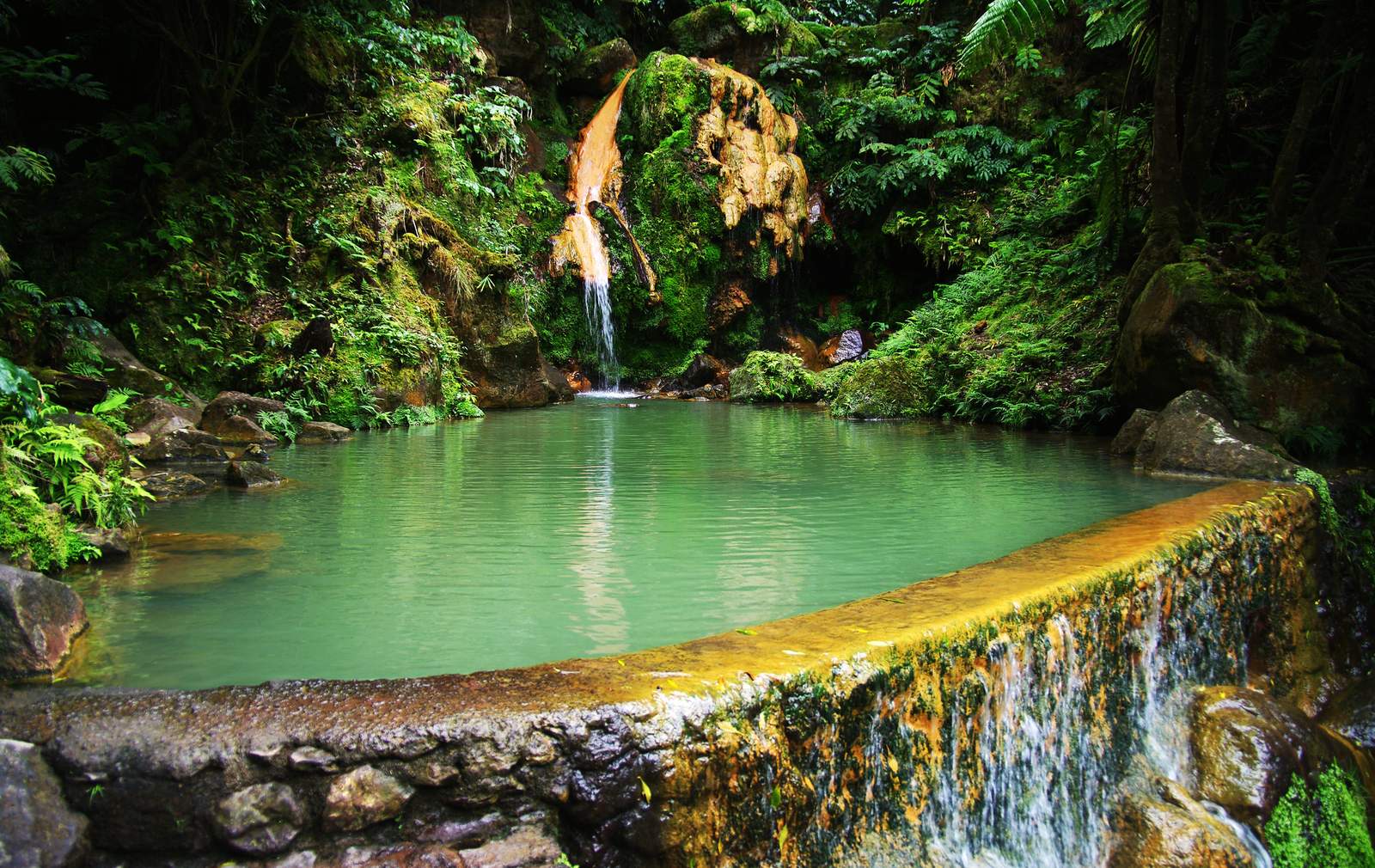
The largest island is the easy and generous choice. It has the best flights, the widest range of hotels and, within a morning’s drive of each other, almost everything the photographs promise: the twin crater lakes of Sete Cidades, warm volcanic pools in the forest, the hot springs and gardens of Furnas, a working tea plantation on the north coast, and boats leaving Ponta Delgada to look for whales. If you have a week, São Miguel alone is a complete holiday, and we have set out how it can unfold in our seven days on São Miguel.
If you want a mountain and a glass of something mineral: Pico
Pico is built around a single dormant volcano, Ponta do Pico, which at 2,351 metres is the highest point in all of Portugal. Climb it, or simply let it float above the clouds all day. Down on the western shore the island’s UNESCO-listed vineyards run in a black lattice of lava-stone enclosures to the sea, and the wines that come from them are among the most distinctive in the country. It is the island for walkers, wine lovers and anyone who likes a landscape with an argument in it.
If you love the sea and a good harbour: Faial
A short crossing from Pico, Faial is home to Horta, one of the quietly remarkable small ports of the Atlantic, where visiting sailors have painted a panel on the sea wall for generations. At the western tip lies Capelinhos, where a volcano rose from the sea in 1957 and left a headland of grey ash and a half-swallowed lighthouse. Pico and Faial together make the pairing we suggest most often: a mountain, a vineyard and a harbour within a few kilometres of water.
If you want history, streets and company: Terceira
Angra do Heroísmo, listed by UNESCO in 1983, is a grid of pastel façades, baroque churches and harbour forts, and a proper town rather than a museum. Terceira is the island for travellers who want an evening that ends at a table, among people, after a day that began in the countryside.
If you want cliffs, walking and cheese: São Jorge
Long, narrow and green, São Jorge falls straight into the sea, and at the foot of its cliffs lie the fajãs, small flat aprons of land formed by ancient landslides, some reachable only on foot. The whole island is a UNESCO Biosphere Reserve, and its aged, faintly sharp cheese is the one the Portuguese ask you to bring home.
If you want the edge of things: Flores and Corvo
Flores, a Biosphere Reserve since 2009, is a green wall of waterfalls and crater lakes. Corvo has a single village and a vast collapsed crater you look into rather than at. The western group repays time and patience, and punishes a tight connection; we suggest it to travellers who genuinely want to be far away.
How many islands, and in what order
The practical rule we work to is simple: fly between island groups, sail within them, and give each island at least two nights. Inter-island flights take from about twenty minutes to an hour, and in season the ferries between Faial, Pico and São Jorge are the loveliest way to travel. With a week, choose one island, or two at most. With ten days, São Miguel followed by Pico and Faial is a classic. With two weeks, add São Jorge or Terceira depending on whether you want cliffs or cobblestones.
The islands also change with the season, in any month, and the sky changes by the hour. Late spring to early autumn is the steadiest; our guide to the best time to visit the Azores goes into it properly. For the wider picture of the islands beyond São Miguel, see the Azores beyond São Miguel, and if you are still weighing the archipelago against its Atlantic sibling, our comparison of Madeira and the Azores is the place to start.
Questions we are asked about choosing an island
Which Azores island is best for a first visit?
São Miguel. It is the largest island and the best connected, and it holds the crater lakes, the hot springs and the green hedgerows of hydrangea that most people picture when they think of the Azores. It is a fine holiday on its own, and an easy base from which to add a second island.
Which Azores island is best for whale watching?
Pico and São Miguel are the two bases most visitors choose, and conditions are steadiest from June to September. Whatever the island, the sea decides, so we build in a spare day rather than a single fixed outing.
How many Azores islands should you visit in a week?
One or two. The islands are far enough apart that every move costs half a day, and each deserves at least two nights. Three islands in ten days is a good rhythm; five is a rush.
Choosing is the pleasure, and also the part that benefits from someone watching the flight schedules, the ferry season and the weather windows on your behalf. If you would like to see how a journey through two or three islands could look, see how we design tailor-made holidays in Portugal and the Azores, or start a conversation, and we will shape the order around you.