Madeira or the Azores: which Portuguese island is for you?
Portugal’s Atlantic islands are among its greatest gifts, and travellers often ask us to choose between them. The truth is that Madeira and the Azores are both extraordinary. And quite different in temperament. One is a garden; the other, a frontier. Here is how to tell which is calling you.
In a sentence
Madeira is a lush, dramatic garden-island, polished and easy to love, with mild weather all year. The Azores are wilder, greener and more remote. Nine volcanic islands where nature still sets the terms. Choose Madeira for comfort and colour; the Azores for wildness and wonder.
Choose Madeira if…
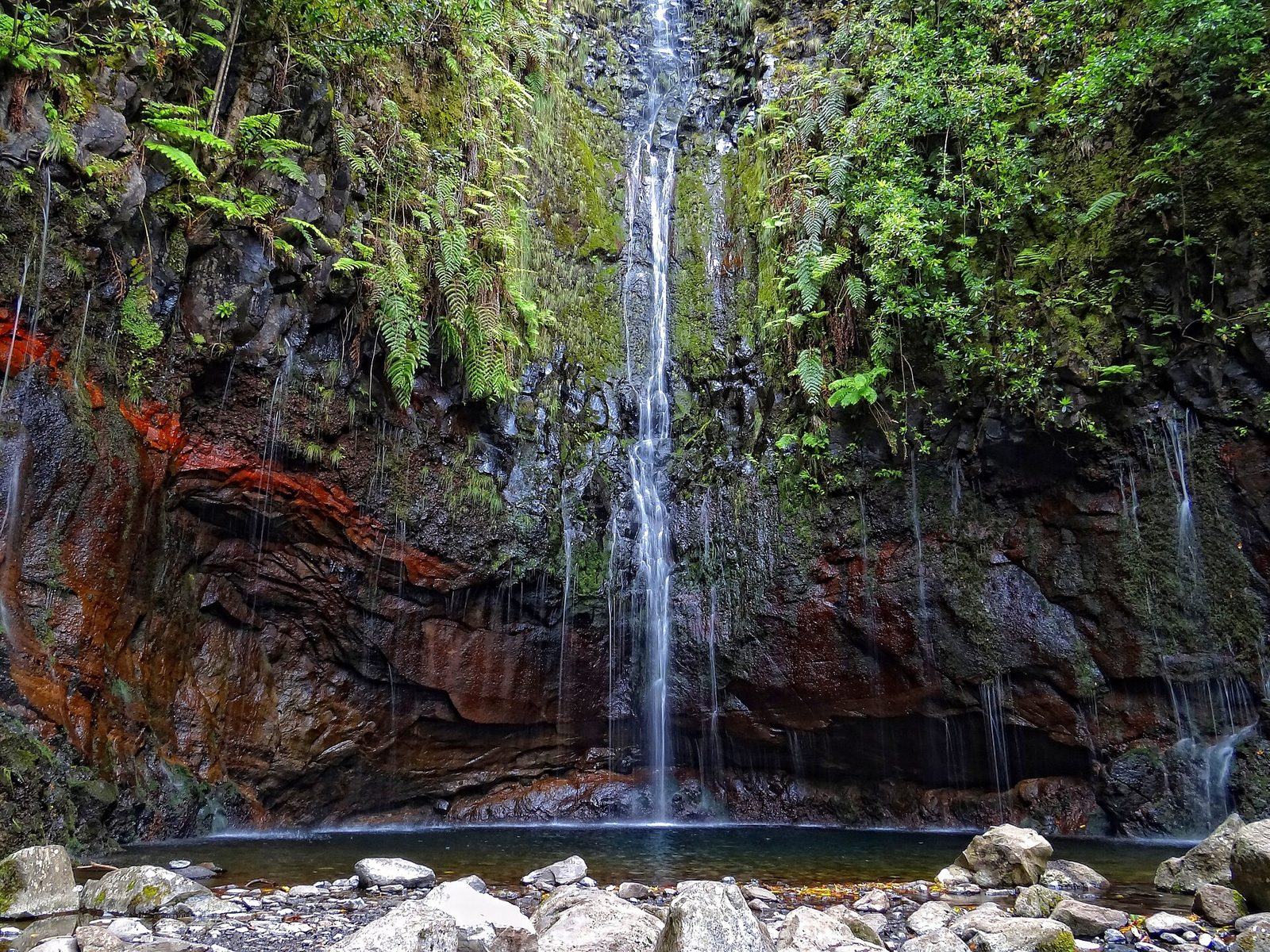
You love gardens, walking and warmth. Madeira is spring all year round: a mountain rising sheer from the sea, threaded with levada trails that lead through ancient laurel forest to hidden waterfalls. Funchal is a sophisticated harbour town with fine hotels, centuries-old wine lodges, and a gentle, established ease. It is the more polished of the two, and the simpler first visit: direct flights, good roads, and a soft landing into island life.
Madeira suits travellers who want beauty without roughness. Levada walks by day, a terrace over the harbour by evening, and a glass of Madeira as the lights come on.
Choose the Azores if…
You are drawn to the wild, the volcanic and the untouched. The Azores are Europe at its most elemental. Crater lakes, steaming fumaroles, thermal springs in the forest, and some of the finest whale watching on earth. There are far fewer travellers, fewer hotels, and a raw, green beauty that feels like nowhere else.
The Azores suit the curious and the active. Those who’ll happily trade a little polish for the thrill of standing on a crater rim with the whole Atlantic below, or watching a sperm whale surface off the bow.
The honest differences
- Getting there: Madeira is the easier, more direct journey. The Azores take a little more planning, and reward it.
- Weather: Madeira is reliably mild and sunny. The Azores are greener, cooler and more changeable. They make their own weather, fast.
- Pace: Madeira is established and comfortable. The Azores are quieter, slower and more remote.
- Wildlife: Both offer whales and dolphins; the Azores are world-class for it.
Side by side
For walking. Both are walkers’ islands, differently. Madeira’s levadas are engineered paths beside old watercourses: level, shaded, astonishing. The Azores are hiking proper: crater rims, coastal trails, summit mornings on Pico for the ambitious. Gentle and grand versus wild and earned.
For the sea. Madeira’s coast is dramatic rather than sandy; natural lava pools and warm water make up for the scarcity of beaches. The Azores offer the finest whale watching in Europe, sperm whales resident, blue whales passing in spring, and thermal springs where the island itself heats the water.
For the table. Madeira brings black scabbard fish with banana, limpets sizzling in garlic, and its immortal fortified wine, best drunk where it was born. The Azores answer with cozido cooked underground by the volcano, cheeses from cows that outnumber people, and tuna landed that morning.
For the weather. Madeira holds between roughly 17 and 26 degrees all year: the eternal-spring island. The Azores are greener because they are rainier, with four seasons before lunch and rainbows as a daily occurrence. We wrote a full guide to the best time to visit the Azores.
With children. Madeira is the easier win: lidos, cable cars, toboggan runs and gentle levadas. The Azores reward slightly older children who will remember a whale surfacing for the rest of their lives.
Getting around. Both are private-driver or self-drive islands. Madeira’s roads are excellent and vertiginous; the Azores ask for island hops by short flight, which we weave together so the seams never show.
Or, both
There is, of course, a third answer: both. They pair beautifully into a single Atlantic journey, and we often design exactly that: the garden and the frontier, a week or so on each, with everything between handled.
How many days for each
Madeira gives its best in five to seven days: time for the levadas, the peaks, Funchal and a day of doing nothing on purpose. The Azores want seven to ten, across two or three islands (São Miguel always, then Pico and Faial, or Terceira). The combined Atlantic journey, one island group flowing into the other, is at its most graceful in twelve to fourteen days, and it is one of the journeys we design most proudly.
Questions we’re often asked
Which is warmer, Madeira or the Azores? Madeira, reliably. It sits further south and holds its spring-like warmth all year. The Azores are milder and moodier, and their green is the receipt.
Can you combine Madeira and the Azores in one trip? Beautifully. Direct flights link Funchal and Ponta Delgada on select days, and the two island worlds make natural chapters of a single Atlantic journey.
Which is better for hiking? For gentle, spectacular walking, Madeira and its levadas. For wilder trails and crater rims, the Azores. Serious walkers tend to leave wanting both.
Which for a honeymoon? Madeira for polish and warmth: fine hotels, terraces over the harbour, ease. The Azores for couples whose romance is a hot spring in the forest with nobody else in it. We design both, often for the same couple, years apart.
Do you need a car on the islands? On both, yes, or better, a private driver who knows which mirador the clouds will clear first. Distances are short; the difference is in the timing, and timing is local knowledge.
Still unsure? That’s what we’re here for. Tell us how you like to travel, and we will point you to the right island. And design the journey around you. Start a conversation.