The best time to visit Portugal
Portugal is one of those rare countries with no truly bad season. The light is generous, the winters are mild, and the Atlantic keeps everything in balance. But the right time depends on where you’re going and what you’re after. And a little local knowledge goes a long way.
The short answer
For most travellers, late spring and early autumn, May, June, September and October are the sweet spot: warm but not fierce, bright and long-evening’d, and blessedly free of the high-summer crowds. If we had to choose a single month, late September is hard to beat: the sea is still warm, the Douro is into harvest, and the country exhales.
By season
Spring (March–June): Wildflowers, hillsides impossibly green, and the south already warm. The shoulder months are quietest, the best rooms still open.
Summer (July–August): Reliable sun and long beach days. But the coast is busy and the interior, especially the Alentejo, can be very hot. Book early, and we’d steer you toward the cooler north or the islands.
Autumn (September–October): Our favourite. Warm seas, golden light, the wine harvest, and a country returned to its own rhythm.
Winter (November–February): Quiet, soft and underrated. Lisbon is lovely in low-season light, and you’ll have the great sights nearly to yourself.
Month by month
January. The quietest month, and quietly lovely. Lisbon in crisp, low light, museum mornings and long lunches, and by the month’s end the first almond blossom in the Algarve’s interior. Madeira, as ever, stays spring-mild.
February. Almond blossom whitens the south, Carnival arrives with more mischief than you’d expect, and hotel rates are at their gentlest. A fine month for the city-and-countryside journeys we design around food and wine.
March. The country turns green almost overnight. Wildflowers begin in the Alentejo, café terraces reopen in earnest in Lisbon, and the light stretches noticeably. Spring proper, a few weeks ahead of the rest of Europe.
April. One of the loveliest months of the year: Holy Week processions in the north, mild first swims in the Algarve, and the Douro’s terraces flushing green. Easter week needs booking well ahead; the weeks either side are a quiet triumph.
May. Late-spring perfection. Warm enough to swim in the south, the hills still green, the evenings long, and the great whales passing through the Azores in numbers. If your dates are flexible, May rarely disappoints.
June. Lisbon’s month. For the santos populares the old quarters fill with grilled sardines, basil pots and paper lanterns, and the whole city eats in the street. Beaches are warm, and the crowds still civilised.
July. Full summer: reliable sun, warm seas, and the coast in demand. We book our travellers many months ahead, and often steer them north to the green Minho or out to the islands, where July is glorious and gentler.
August. The hottest and busiest month, when the Portuguese themselves go on holiday. It has its joys (festas in every historic village, warm night air), but if August is your window, let us place you carefully: the north, the Azores, or addresses with room to breathe.
September. Our month, and we say so every year. The sea is at its warmest, the light turns gold, the Douro brings in its harvest, and the country exhales as the summer crowds go home. Late September, above all, is hard to beat.
October. The south holds on to summer while the north turns amber. The Alentejo and the Algarve are at their most generous: warm days, empty beaches, the year’s new wine. One of the best-kept secrets in the calendar.
November. Soft, quiet and underrated. São Martinho fills the country with roast chestnuts and young wine, and the first Atlantic swells bring the giant waves to Nazaré for those who like their ocean dramatic.
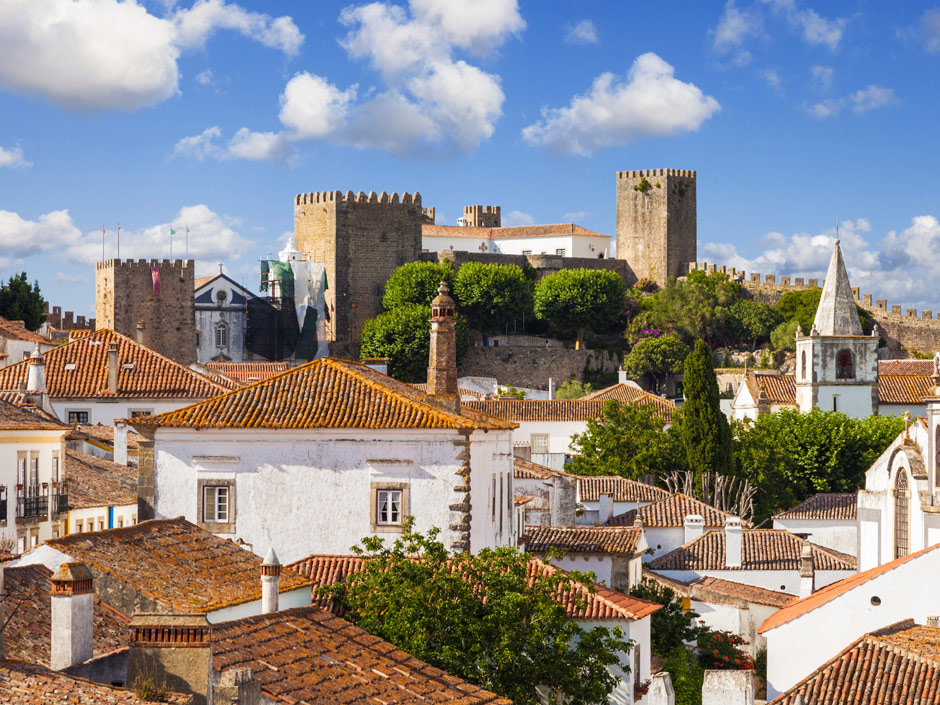
December. Lisbon dresses for Christmas, Óbidos becomes a storybook, and Funchal throws one of the great New Year’s Eve fireworks anywhere: Madeira’s bay full of ships, the whole amphitheatre of the town alight.
By region
Lisbon is a year-round city, at its finest in May, June, September and October, when the light is long and the terraces full but not overrun. Even midwinter has its rewards: see Lisbon in 3 days for how we shape a short stay.
Porto and the north are best from May to October; the winters are greener and wetter, which is exactly why the Minho looks the way it does. Porto itself is wonderful in the shoulder months, when the lodges and the riverside are yours to take slowly.
The Douro Valley is at its most alive in September, when the harvest bends the whole valley to one rhythm; we wrote about why the vintage is the trip. Spring, when the terraces turn green, is its quiet second season.
The Alentejo belongs to spring and autumn: wildflowers and green hills in March and April, golden warmth and the wine harvest in September and October. High summer is fierce here, and we plan around it, with pools, long siestas and dinners under the stars.
The Algarve swims comfortably from May into October, and the sea is warmest late in the season. Outside those months it becomes something else entirely, and rather special: almond blossom, empty cliff paths and lunches that last all afternoon.
Madeira barely has a winter: the island holds between roughly 17 and 26 degrees all year, which is why we send travellers there in every month. Levada walks are loveliest in spring; the New Year fireworks are a spectacle of their own.
The Azores keep their own calendar, and the season matters more here than anywhere: April to September is the heart of it, with the great whales passing in spring. We wrote a full guide to the best time to visit the Azores, and to choosing between Madeira and the Azores.
By mood
For the sea: June to early October on the mainland, with September the warmest water of all. Madeira swims nearly year-round.
For wine: September for the harvest, above all in the Douro; spring for green terraces, quiet cellars and winemakers with time to talk.
For walking: March to May and October, when the Alentejo, the west coast and Madeira’s levadas are green, cool and largely empty.
For cities and culture: any month at all. Lisbon and Porto in winter are a connoisseur’s pleasure: low light, no queues, and the best tables easy to come by.
For whales and wildlife: April and May in the Azores for the great migrating baleen whales; resident dolphins near Lisbon all year.
Our advice
The secret isn’t the perfect week. It’s travelling slightly against the grain. A few days either side of peak season, and you get the same warmth with half the company. We build our journeys around exactly that kind of timing.
Questions we’re often asked
When does it rain most in Portugal? November to February, and far more in the north than the south: Porto and the Minho earn their green, while the Algarve stays one of the driest corners of Europe. Even in winter, rain tends to arrive in spells rather than settle in.
Is Portugal worth visiting in winter? Emphatically, if you choose it for the right reasons: mild city days, empty monuments, honest low-season rates and Madeira’s eternal spring. It’s the season we recommend to travellers who love places at their own rhythm.
When is the sea warmest? Late August and September, when the mainland Atlantic reaches its yearly peak and the Algarve’s sheltered eastern beaches are at their gentlest. Madeira’s sea runs warmer still, well into October.
How far ahead should we book? For September, Easter and the summer school holidays, six to nine months, and more for the smallest and most beloved hotels, which hold only a handful of rooms. The earlier we begin, the more of Portugal we can hold open for you.
When is Portugal least expensive? November to February, outside the festive weeks. The country is quieter, the light is beautiful, and the same journey simply costs less.
Tell us roughly when you can travel, and we’ll tell you honestly where Portugal will be at its best. Start a conversation, and let’s find your window.