Portugal's History, Told Through Its Dishes
You can read Portuguese history in a library, or you can read it at the table. A surprising amount of what ends up on the plate here is a leftover from empire, religion, or a hard winter in the north. A few dishes carry more of the story than others.
Bacalhau, and a fish that isn’t ours
Portugal is obsessed with salt cod, and cod does not live in Portuguese waters. That contradiction is the whole point. During the age of the Discoveries, Portuguese boats sailed to the cold banks off Newfoundland, and salting the catch was the only way to bring it home across an ocean. Cod that keeps for months was perfect for long voyages, and for Catholic fast days when meat was off the table. People will tell you there is a bacalhau recipe for every day of the year. There probably isn’t, but the fact that Portugal believes it tells you something.
The pastel de nata and the convent
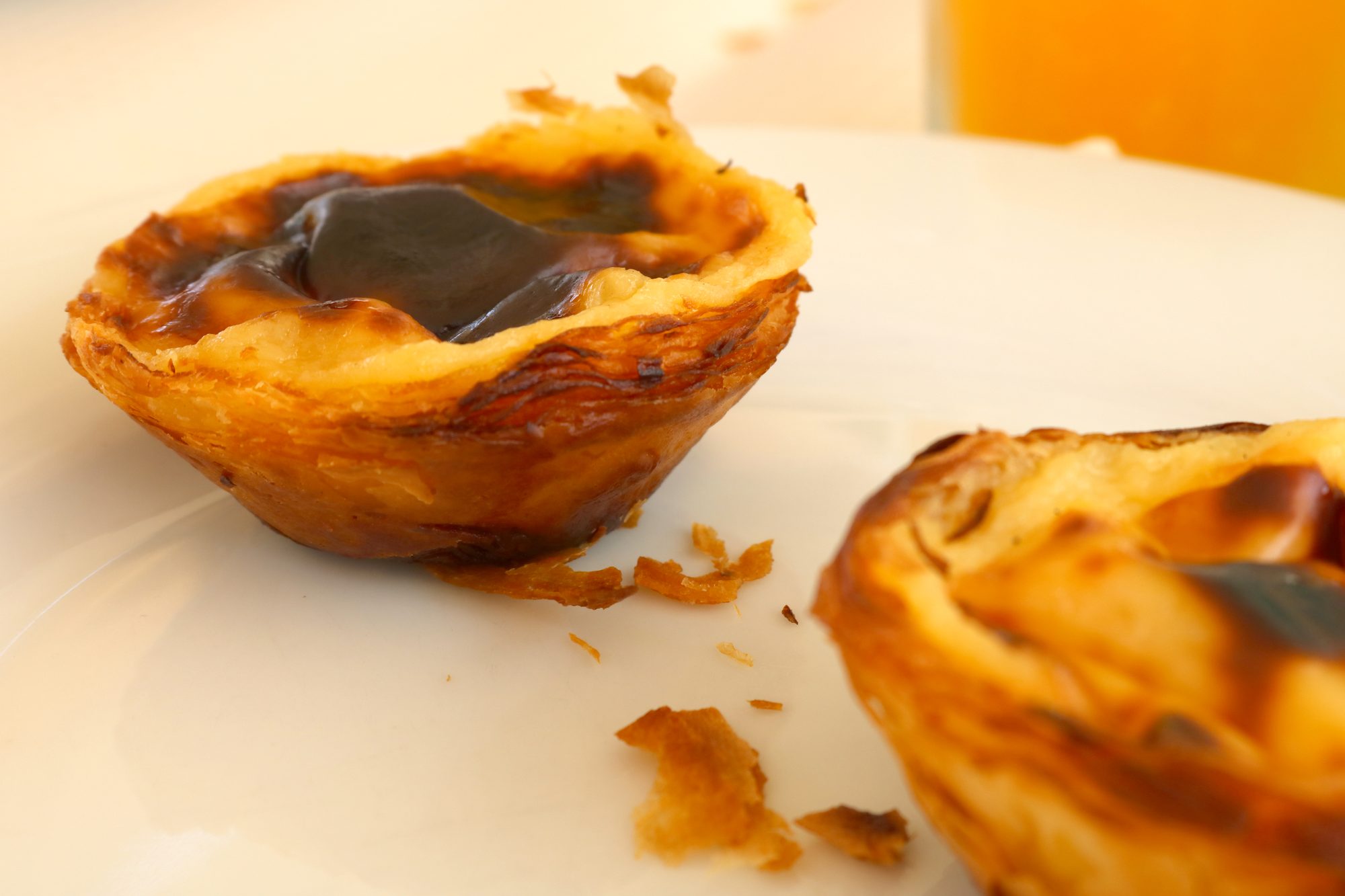
The custard tart everyone queues for in Belém started behind monastery walls. Monks and nuns went through enormous quantities of egg white, to starch their habits and to clarify wine, which left them with yolks to spare. The answer was sweets, and lots of them, egg-yolk rich and syrupy. The tarts were made at the Jerónimos monastery in Belém; when the religious orders were dissolved in 1834 and the monastery lost its income, the recipe was sold to a shop next door, which opened in 1837 and still sells them today. That whole family of yolky convent sweets, from ovos moles to toucinho do céu, comes from the same thrifty habit.
Piri-piri, a dish shaped like a trade route
The little chilli that fires up Portuguese grilled chicken is native to neither Portugal nor Africa. It came from the Americas, carried on Portuguese ships to Mozambique and Angola, took to the African soil, and travelled back into Portuguese kitchens. Order frango piri-piri and you are eating a map of the old trade routes, drawn in hot sauce.
Caldo verde, food from the north
Not everything here came from an empire. Caldo verde, the green soup of thin-sliced couve, potato and a single coin of chouriço for flavour, is northern country food, from the Minho. Worth remembering that the potato holding that soup together was itself a New World arrival that quietly changed how the north ate.
Port, and the English
Port wine owes a lot to a war and a treaty. When England fell out with France, it needed wine from somewhere else, and the Methuen Treaty of 1703 traded English wool for Portuguese wine on generous terms. British merchants set up in Porto, and to stop the wine spoiling on the sea voyage they added grape spirit, which is how port became fortified and sweet. The Douro, where the grapes grow, was marked out in 1756 as one of the first demarcated wine regions anywhere, on the orders of the Marquis of Pombal.
The Moorish sweet tooth
Go south to the Algarve and the flavours shift again. Almonds, figs, egg-and-almond sweets, and a general love of sugar and cinnamon are the legacy of centuries of Moorish rule. The convents took those ingredients and ran with them, which is why so much Portuguese dessert still tastes faintly of Al-Andalus.
Most of this is easier to taste than to explain. When we send someone to a particular tasca or pastelaria, it is usually because the plate in front of them is carrying a few hundred years of the story, and nobody at the next table mentions it.