Lisbon's Funiculars and the Santa Justa Lift: A Rider's Guide
Lisbon is a city of hills, and for a long time getting up them meant walking. In the 1880s the city started building funiculars, and they never stopped. The three that survive are still part of the public transport network, run by Carris, used by residents on their way home as much as by visitors with a camera. They are national monuments that also happen to save you a steep climb.
Here is what each one is, and how to ride them without losing an afternoon in a queue.
Elevador da Glória
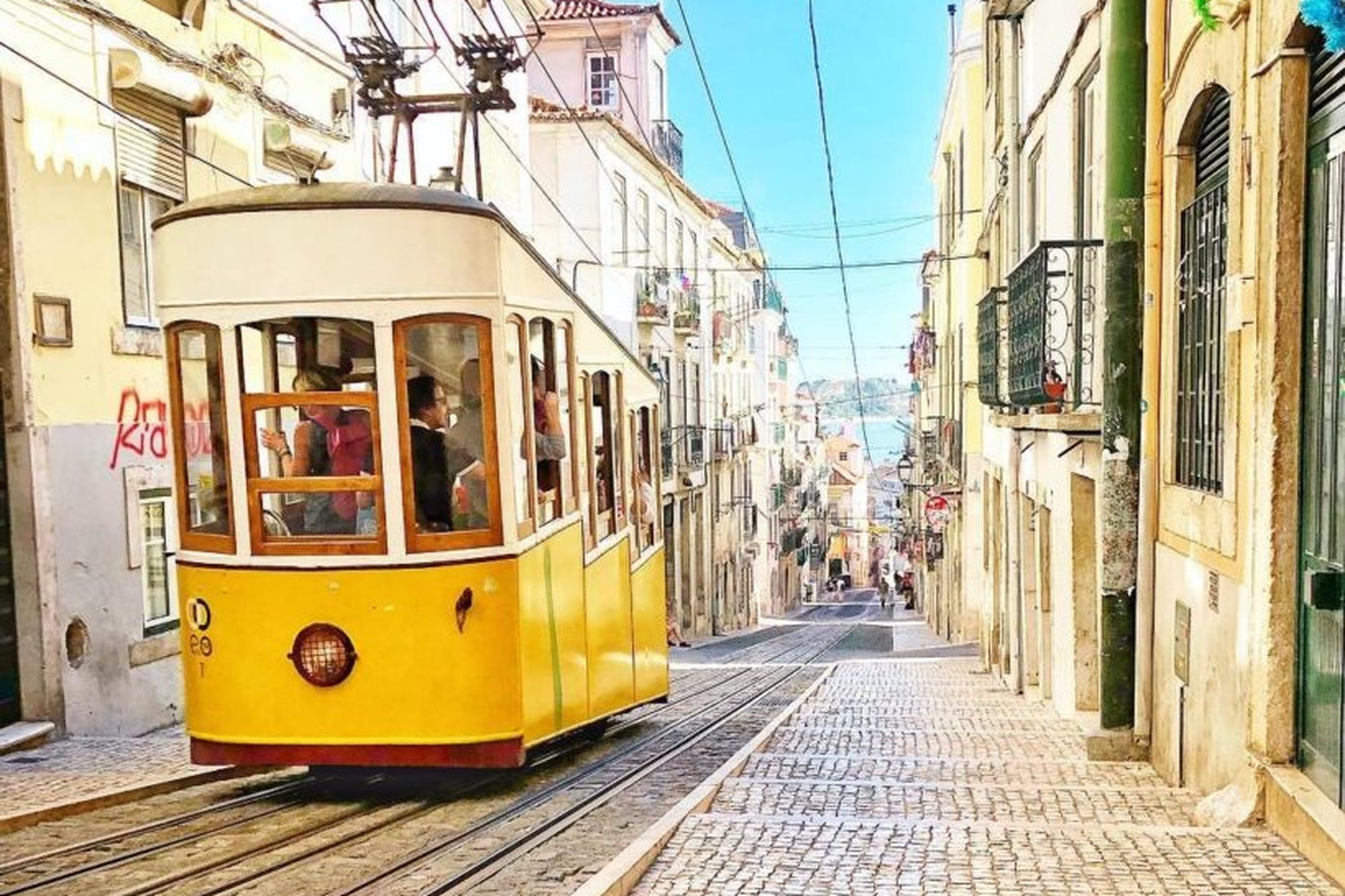
The famous one. It links Praça dos Restauradores, down in the centre, to the edge of Bairro Alto, right beside the São Pedro de Alcântara viewpoint. It opened in 1885 and has climbed the same short, steep street ever since. The yellow car is usually covered in graffiti, which the city has more or less made peace with. Ride it up near sunset and you step out to one of the best free views in Lisbon, across the valley to the castle.
Elevador da Bica
The photogenic one. It runs from near Cais do Sodré up to the Bica quarter and Largo do Calhariz, through a street so steep the tracks look almost vertical. If you have seen a photo of a yellow funicular car framed by tiled houses and drying laundry, it was probably taken here. Come mid-morning if you want that picture without a crowd of other people taking the same one.
Elevador do Lavra
The oldest, and the one almost nobody rides. It opened in 1884 and climbs from Largo da Anunciada toward Campo dos Mártires da Pátria, in a part of town with no postcard stands. This is the one we point people to when they want the funicular for what it is, a short creaking ride up a hill among locals, rather than an attraction. No queue, ever.
The Santa Justa Lift
Strictly, this one is not a funicular. It is a vertical iron elevator that carries you from Rua de Santa Justa, in the Baixa, up to the level of Largo do Carmo and the roofless Carmo Convent. It opened in 1902, the work of Raoul Mesnier du Ponsard, an engineer trained in the same iron-and-rivets tradition as Eiffel, which is why people always bring Eiffel up here. The ironwork is genuinely beautiful, and there is a viewing platform on top.
The catch is the queue, which can swallow an hour on a summer afternoon. The trick most visitors miss: walk up through Bairro Alto and you reach the same upper walkway from Largo do Carmo, behind the convent, without standing in line at the bottom.
Riding them without the hassle
All of them belong to Carris, the city transport company. A single ticket bought onboard is the expensive way to do it. Pick up a rechargeable Viva Viagem card, or better a 24-hour transport ticket, and the funiculars and Santa Justa are included, which pays for itself the moment you ride more than one. The rides are short, a minute or two. The point was never the distance. It is the street, the rattle, and the fact that a machine from the 1880s still does the job.
When we plan a day in Lisbon, we tend to build these in on foot, so you catch the Bica in the quiet light and the Glória as the sun goes down, and never queue for Santa Justa at all.